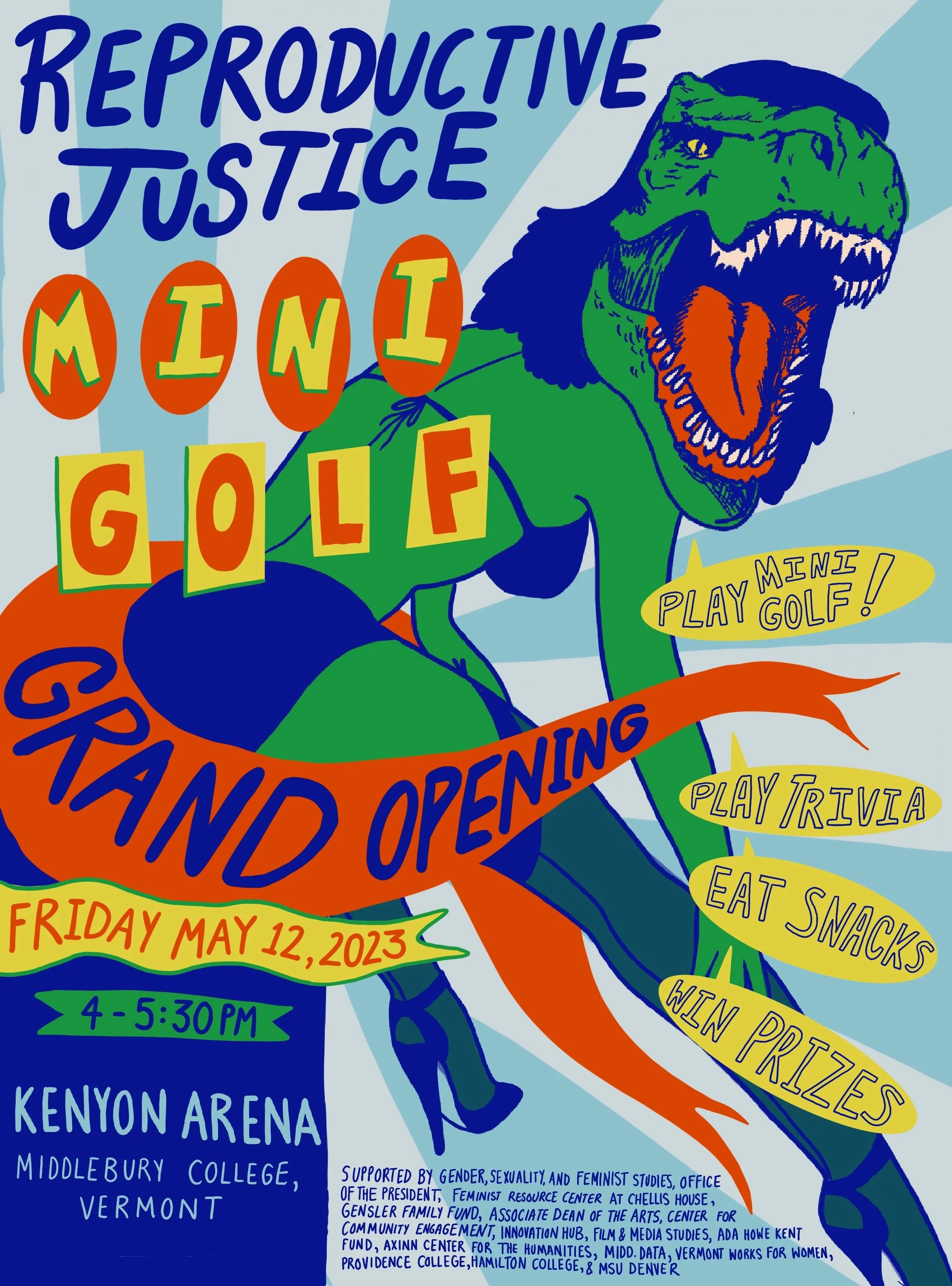
Reproductive Justice Mini Golf (2023)
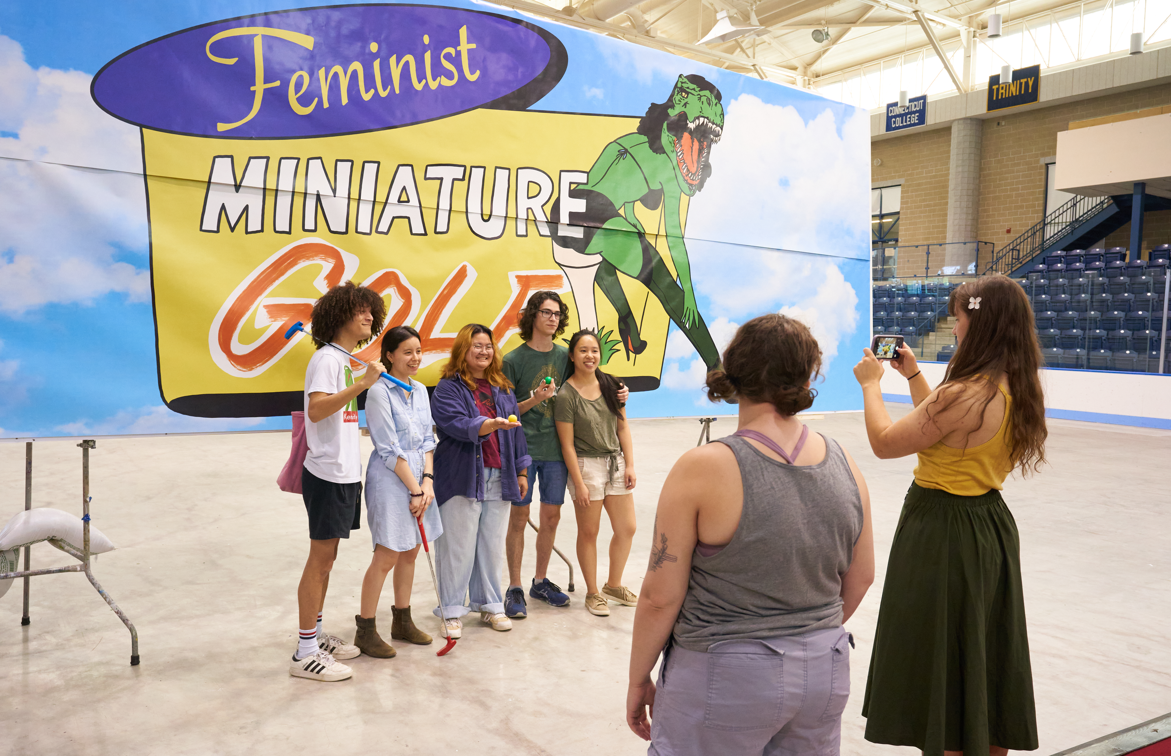
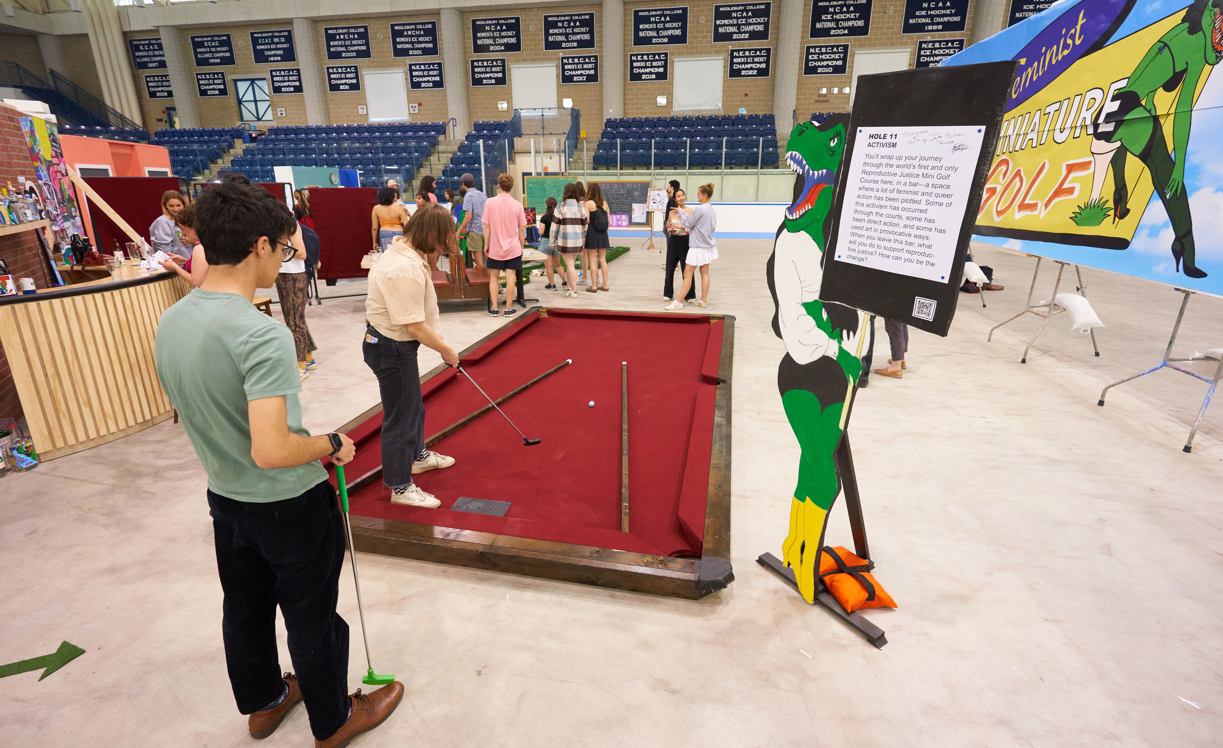
In Spring 2023, I led building the world’s first and only feminist reproductive justice mini golf course. In the twenty days this immersive installation was open to the public, more than 1,800 people visited—in a town with a population of 10,000 and on a campus with 2,500 students. This visual essay functions as an archive of the installation as well as a space to reflect on the lessons we can learn from art-infused reproductive justice activism.
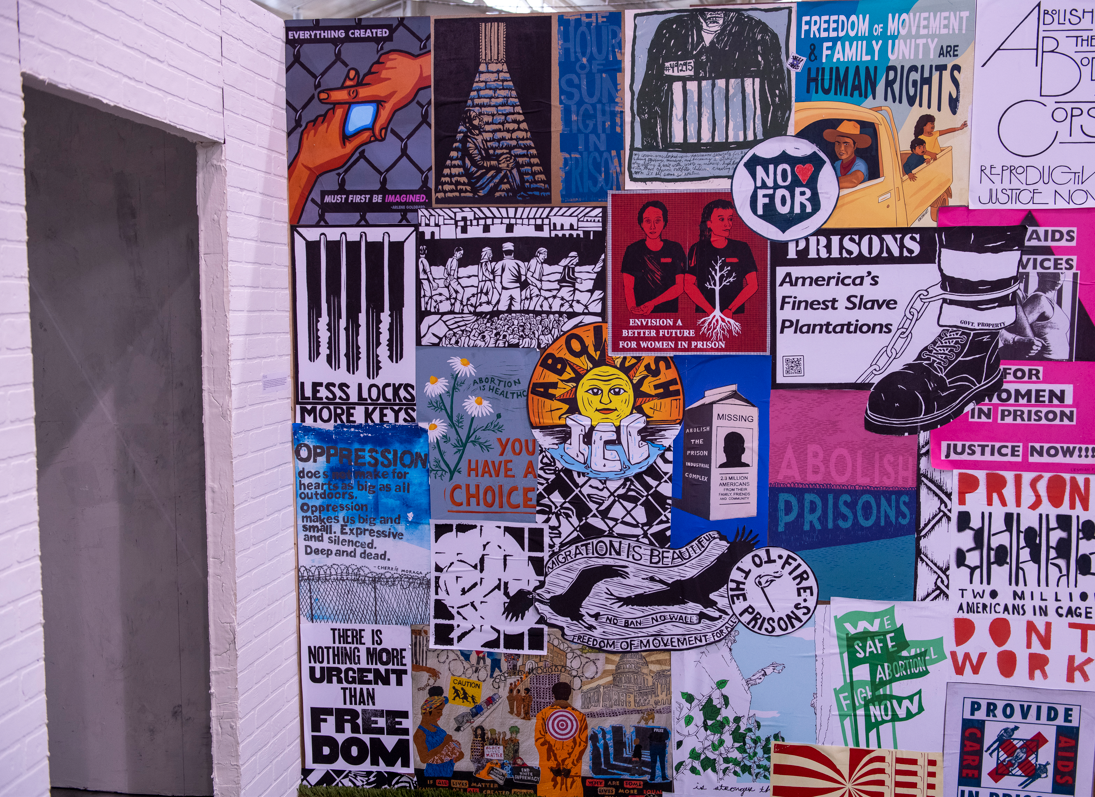
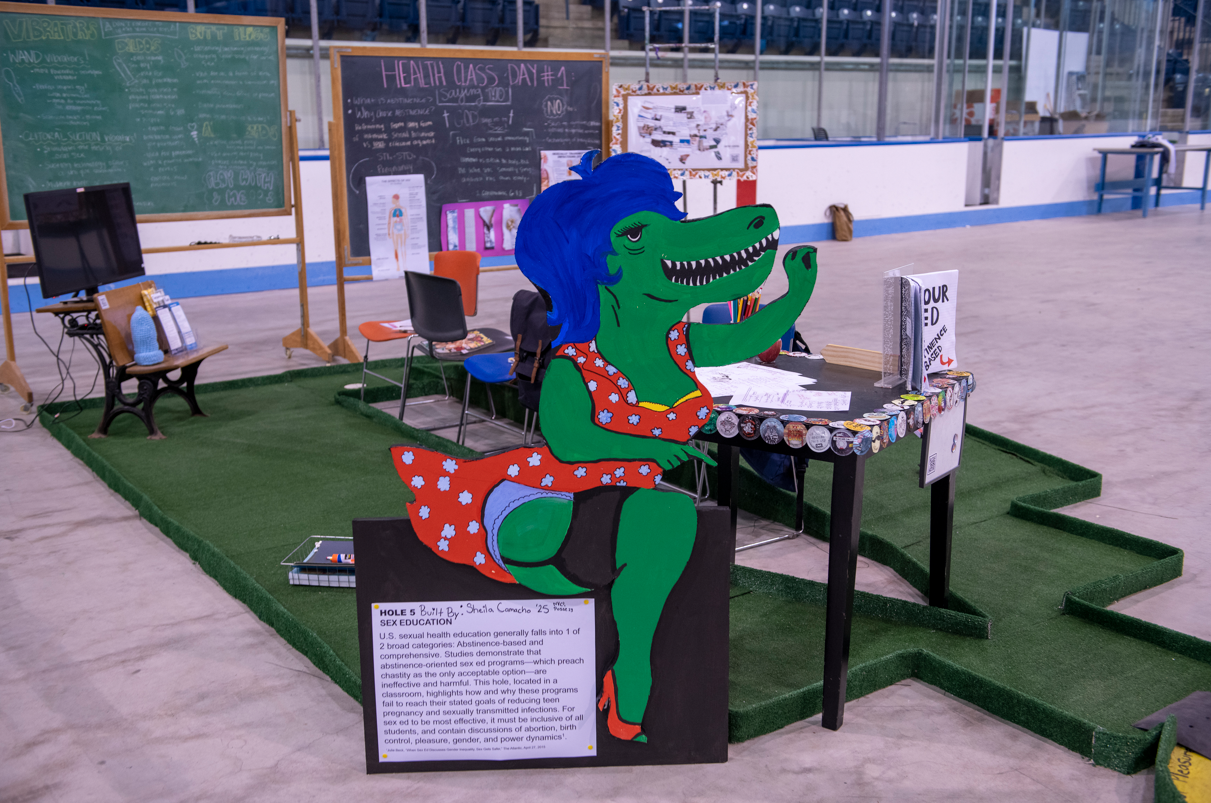
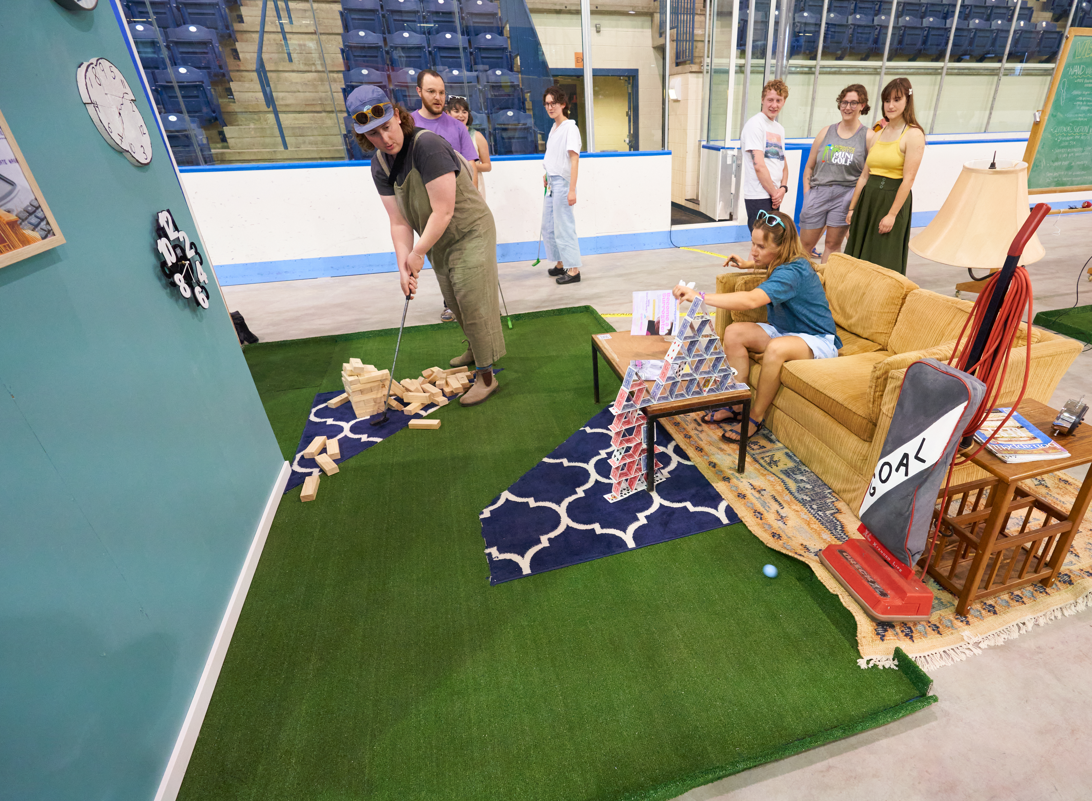
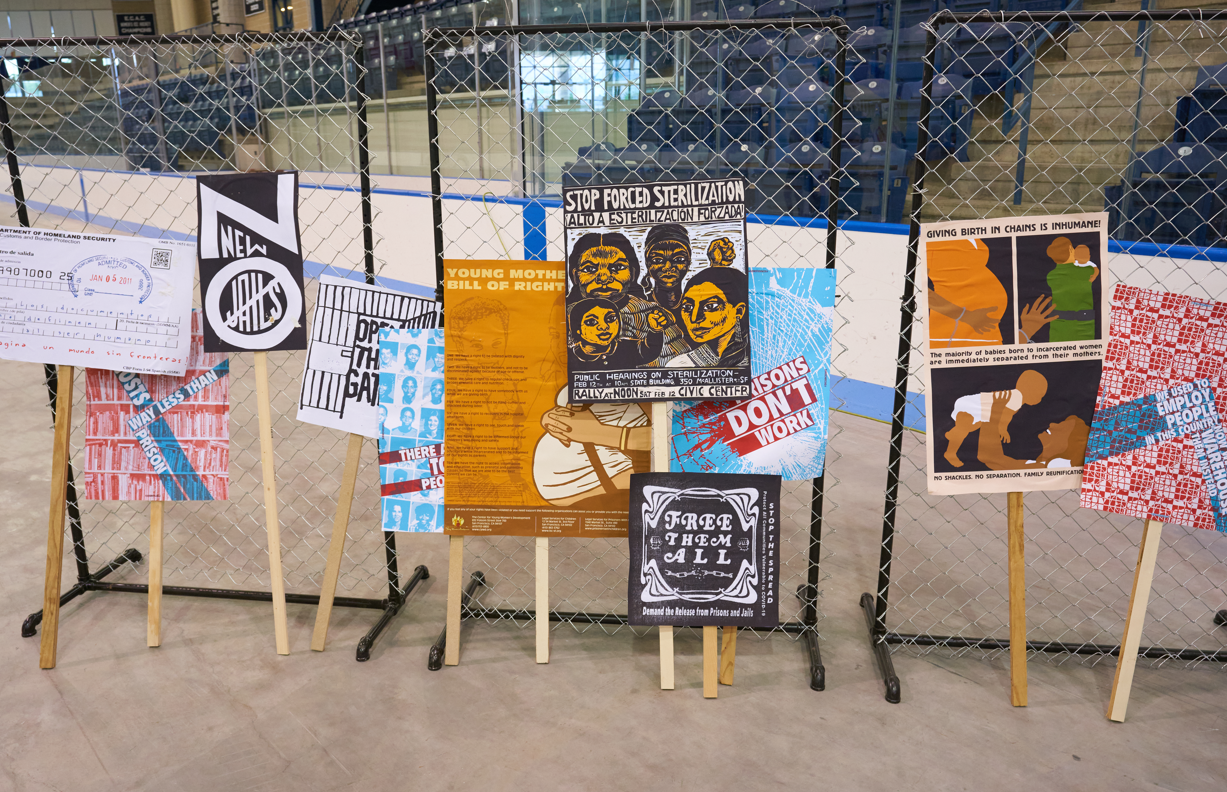
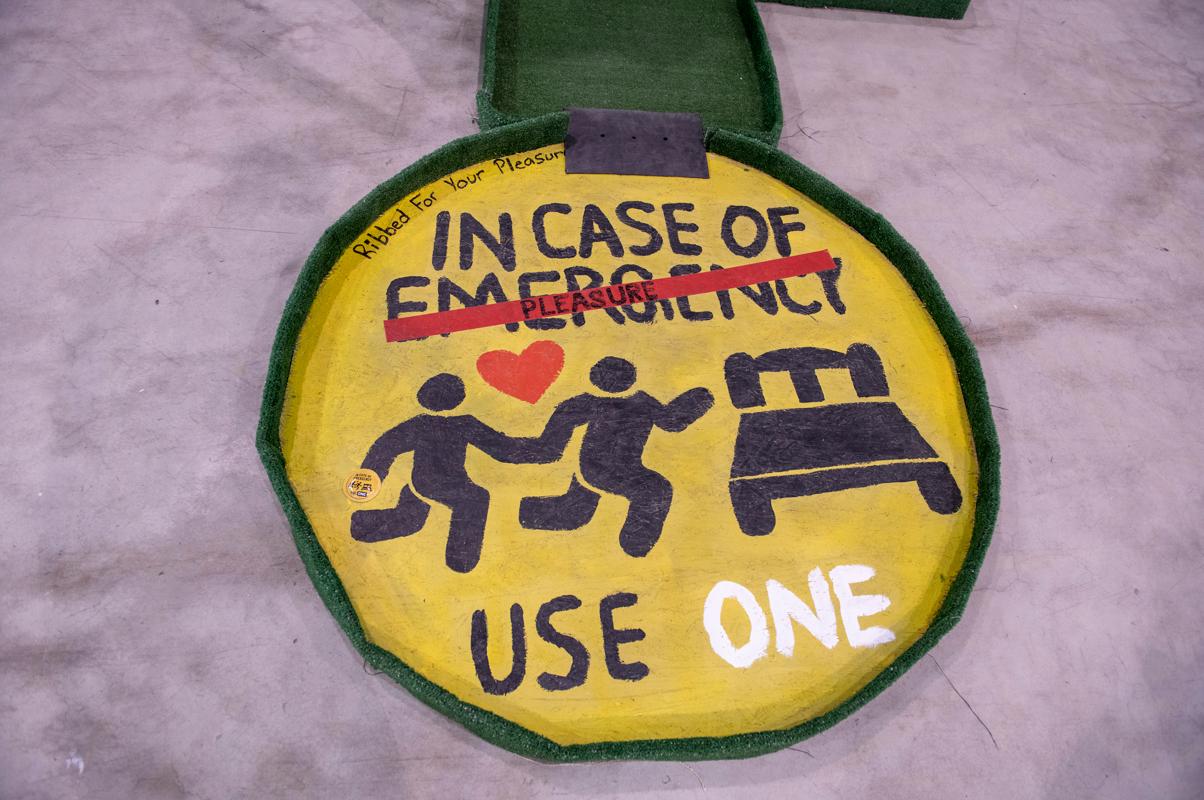
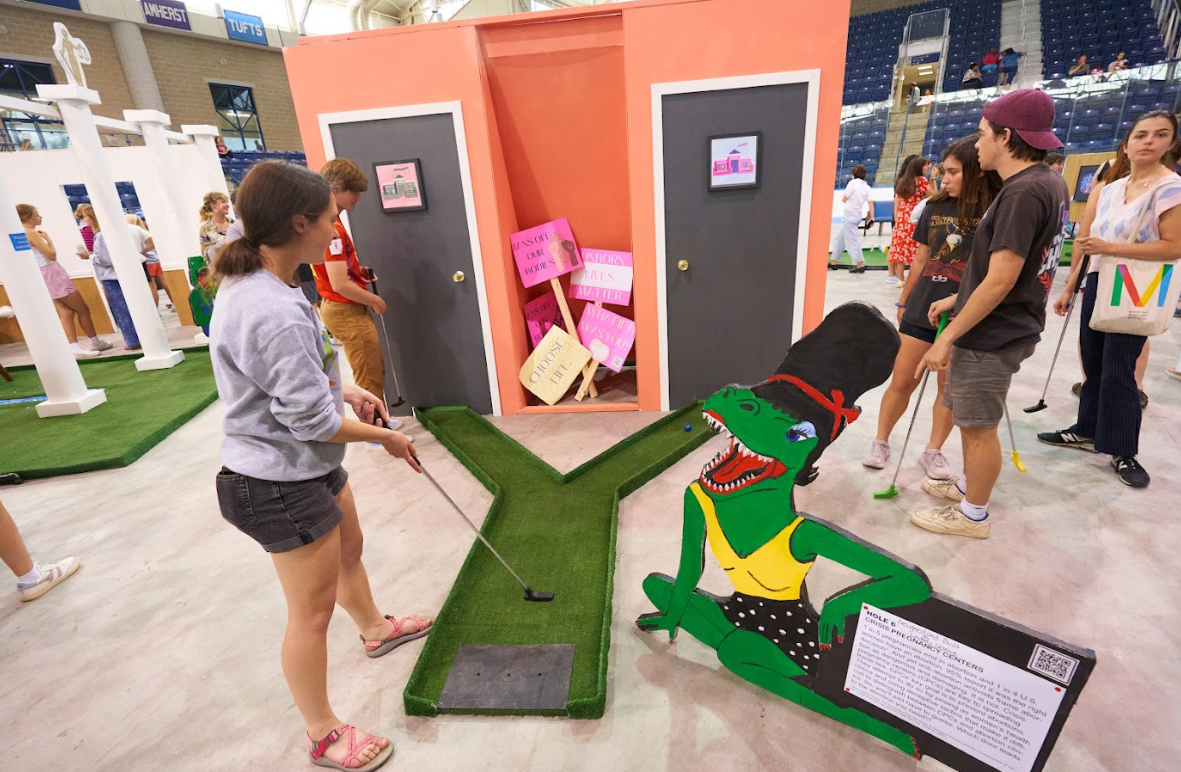
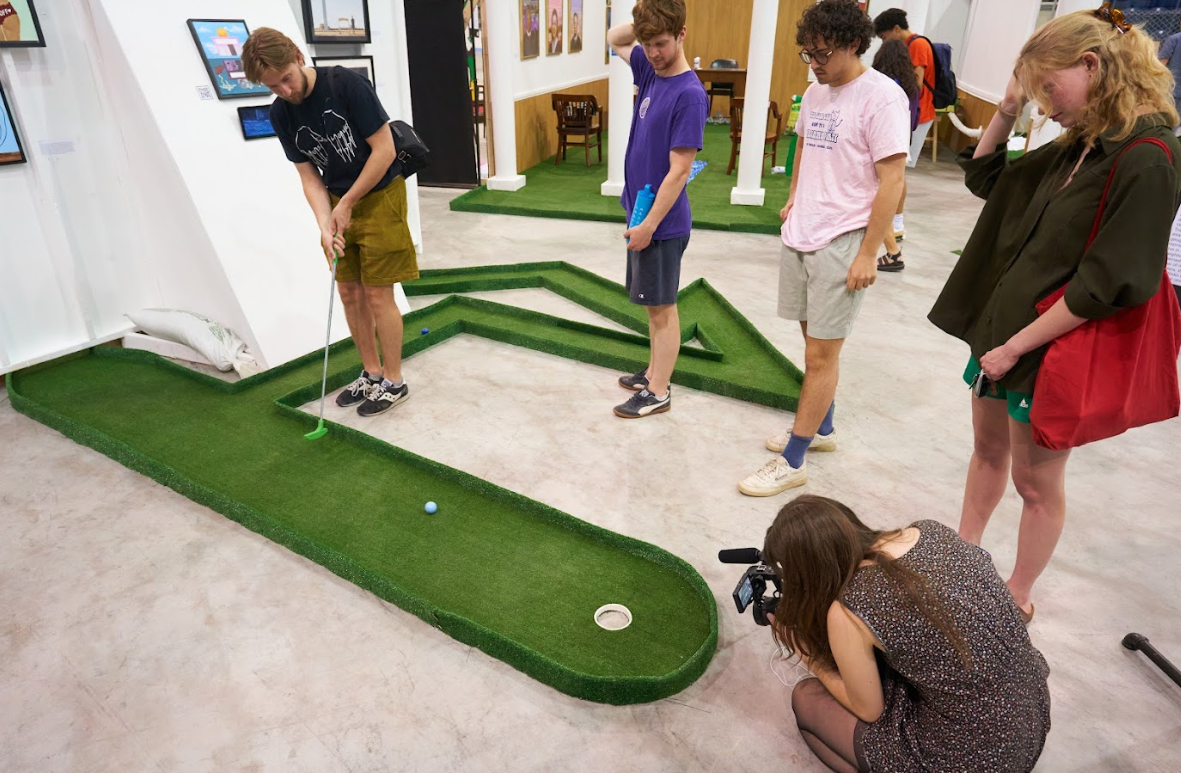
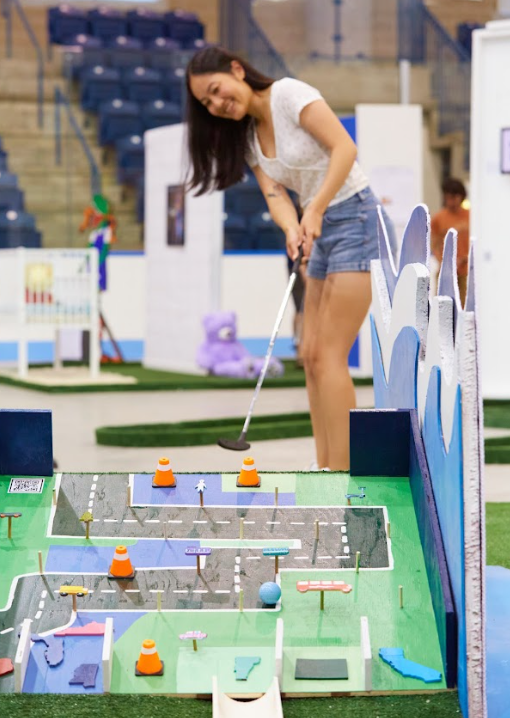
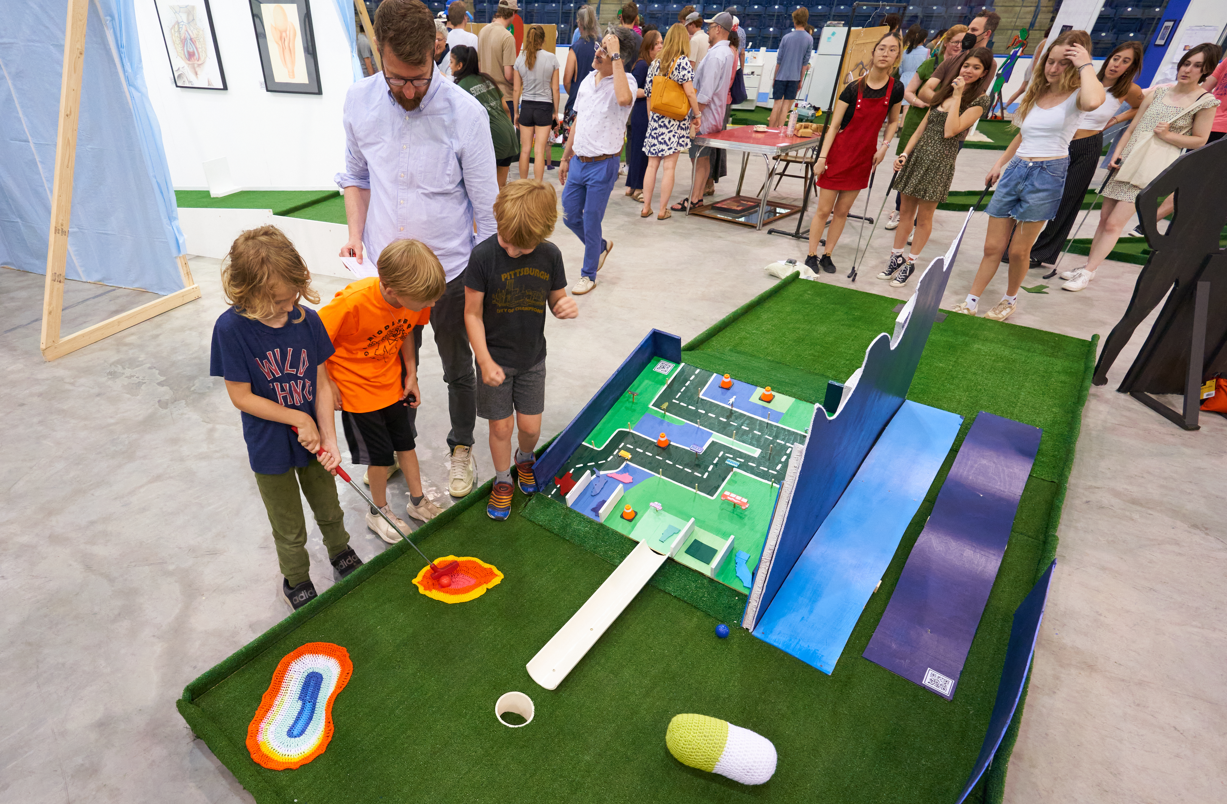
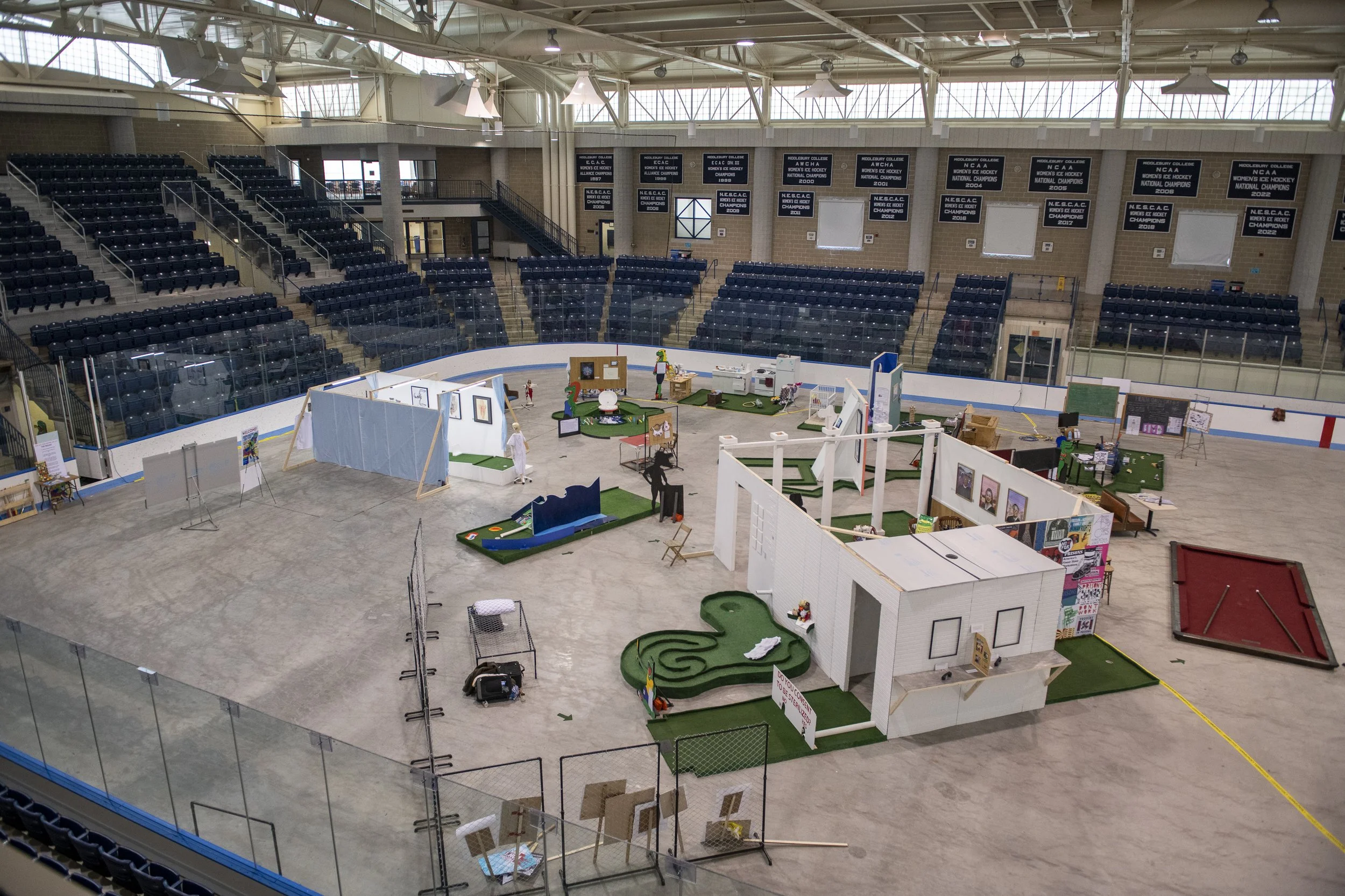
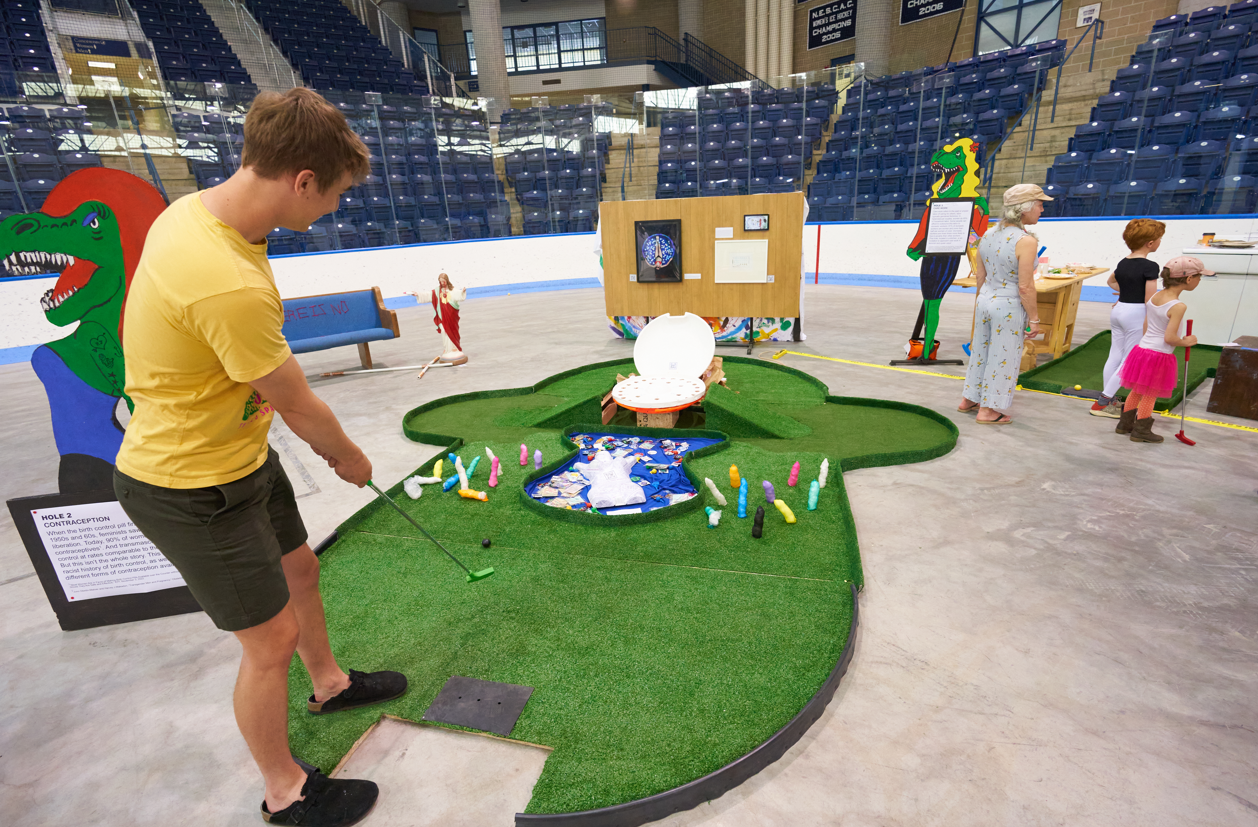
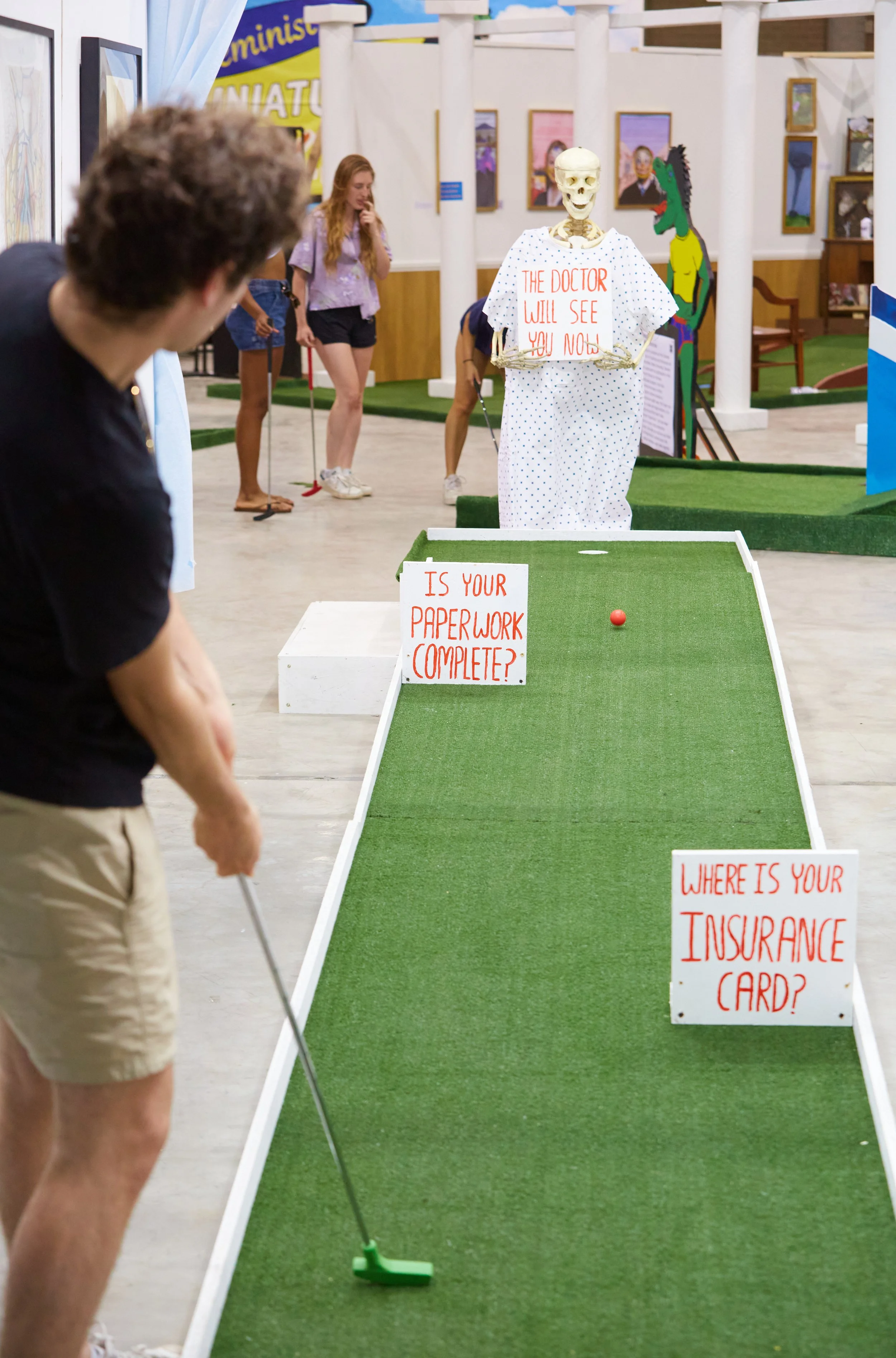
Housed in a hockey rink at Middlebury College unused during the summer, the mini golf course consisted of eleven holes. Each focused on a different topic and was located at a place where issues related to that topic play out in the real world. Topics included: History of science and medicine (a hospital); contraception (a church); care work (a kitchen); surrogacy (a baby’s nursery and living room); sex education (a classroom); crisis pregnancy centers and abortion (a crisis pregnancy center and abortion clinic); transportation (various intersections on a map); environmental justice (a court house); foster care and adoption (a child’s bedroom); incarceration (a prison); and reproductive justice activism (a bar). That the installation was built as a town helped players recognize the degree to which reproductive injustices are woven into the fabric of social life. The flip side, of course, is that possibilities for enacting resistance exist everywhere.
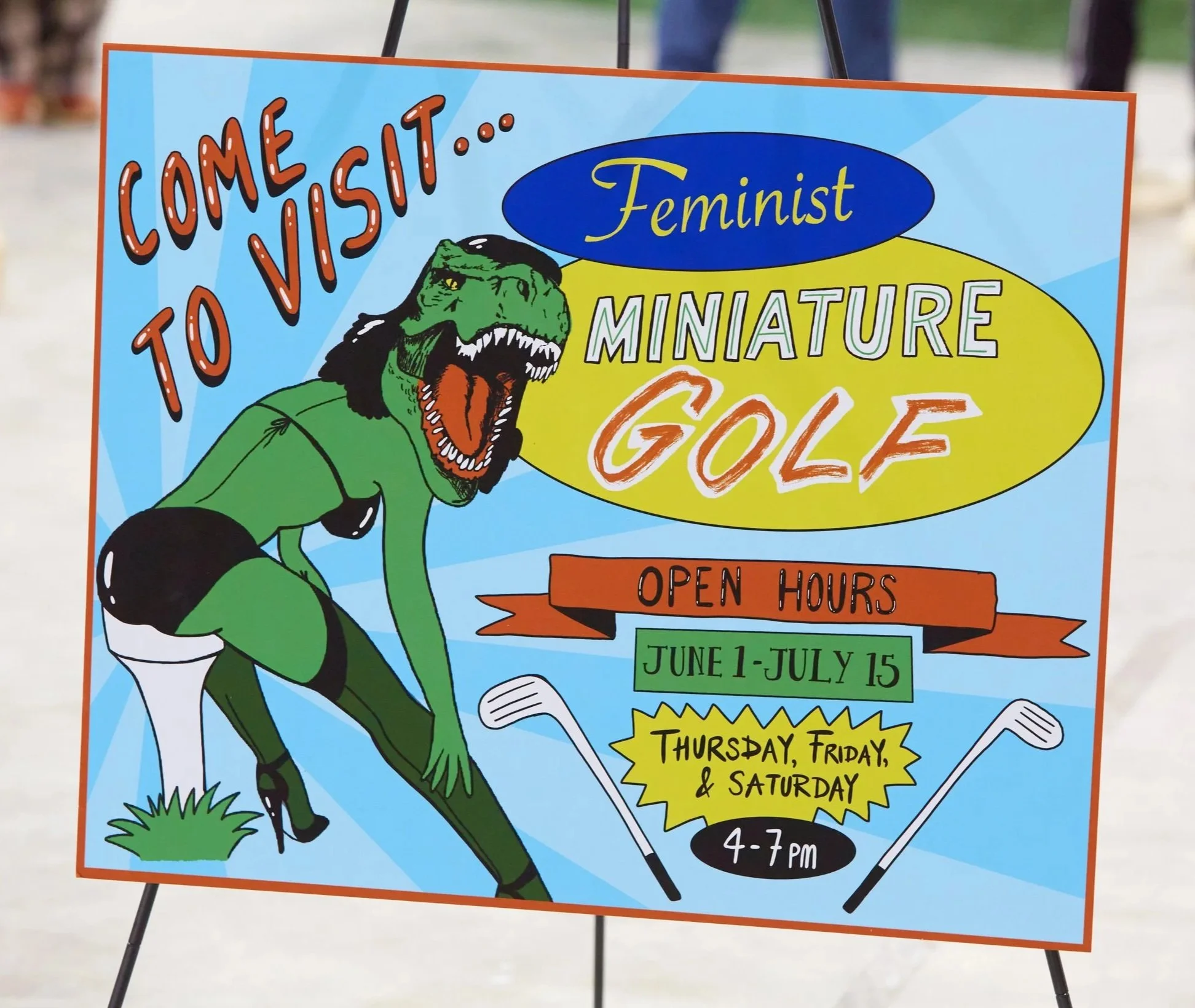
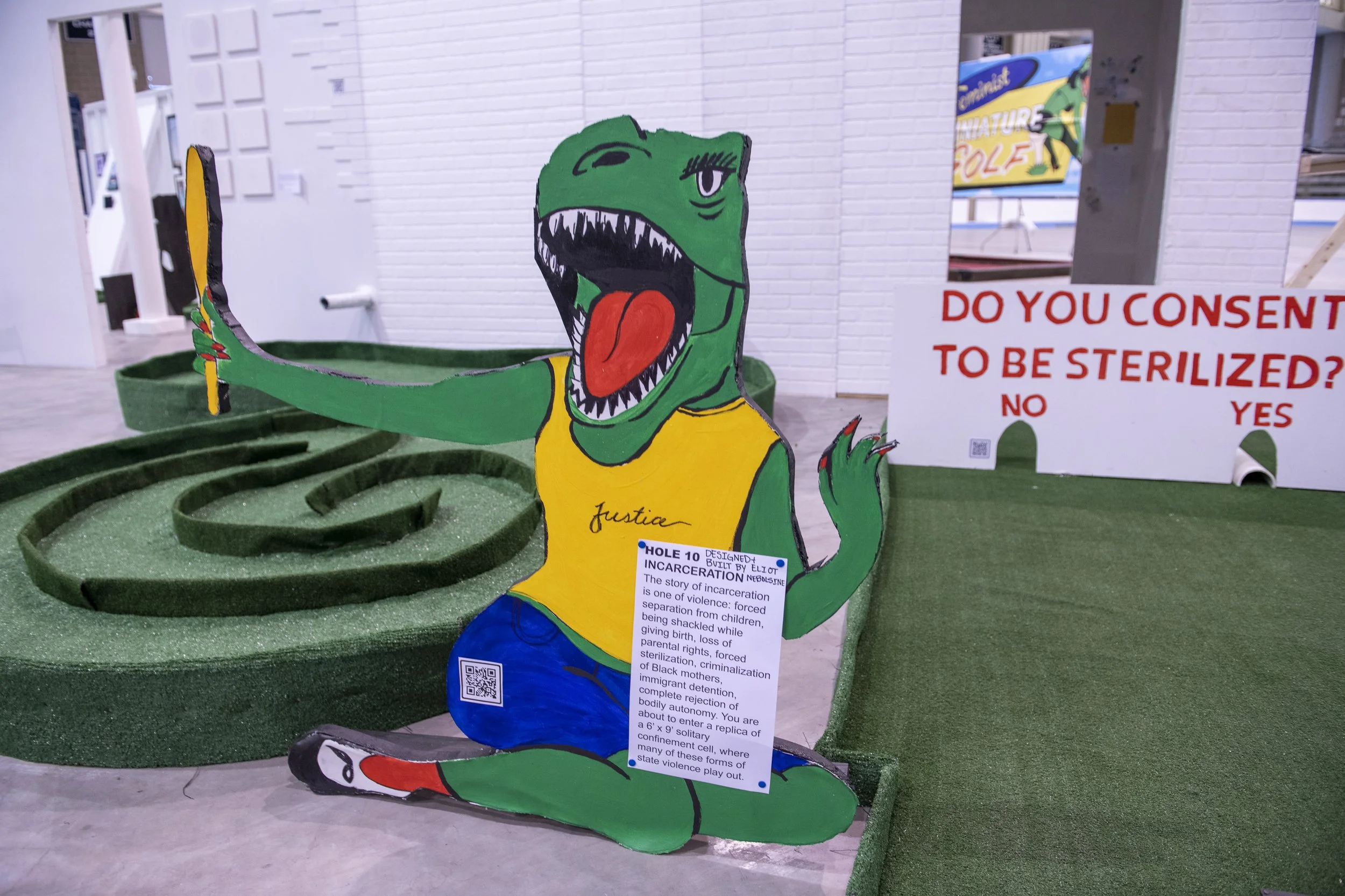
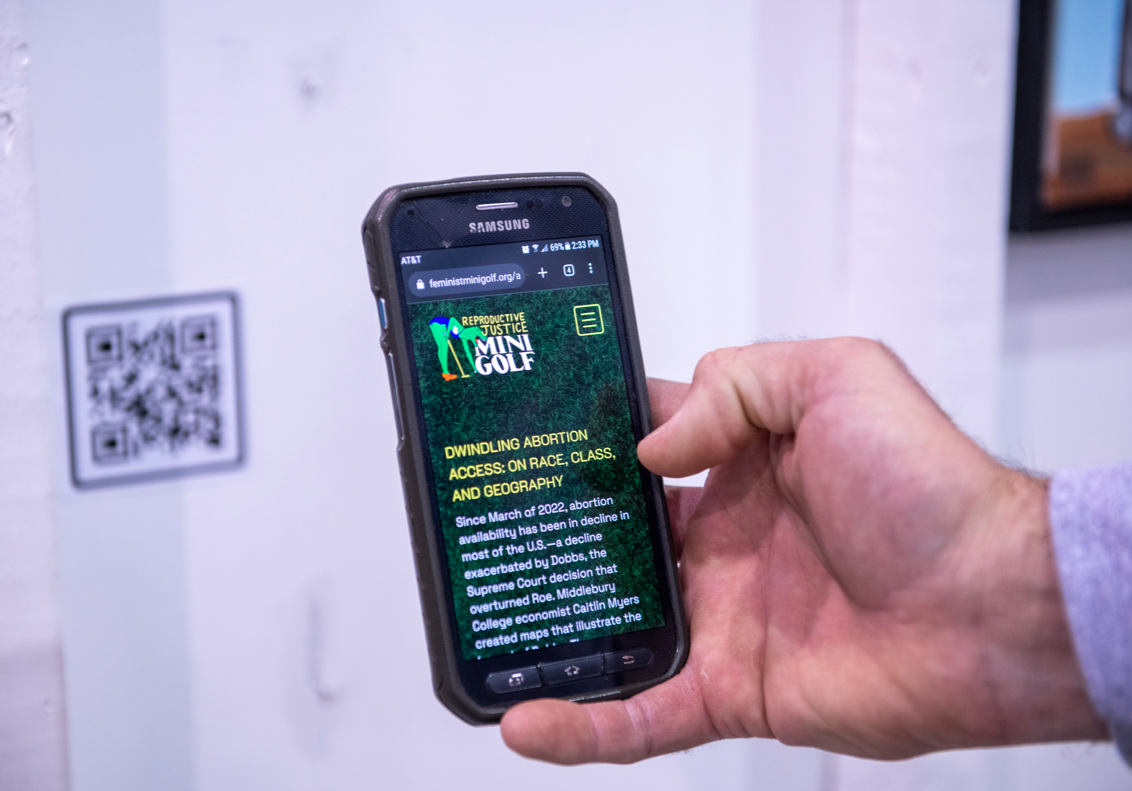
At each hole, players were greeted by a pin-up style dinosaur holding a placard with text about the topic that hole explored. To create opportunities to engage with additional content, each hole included five QR codes linked to a website with additional information. The 65 distinct QR codes throughout the course allowed us to incorporate fifty single-spaced pages of educational content into the exhibit via 250-word bits. Our plan to make academic material more digestible by breaking it up worked; the website has been viewed 3,200 times by 2,100 unique visitors. Additionally, each hole included related artwork and artists’ statements. Much of the content of the art and the text is serious, heavy, and depressing—terms we didn’t want to be the first associated with our installation. The dinosaurs, which appeared throughout many aspects of the project’s branding, provided levity and connected our exhibition to mini golf’s quirky aesthetics.
A project of this magnitude was enabled by deep collaboration rooted in trust and admiration—feelings that develop over time. Indeed, I had worked with the project’s two most key collaborators, Colin Boyd and Rayn Bumstead, on prior projects and knew before we started that we are a dream team. Bumstead, a talented graphic artist, became the project’s Director of Design and managed the project’s digital and artistic components. Boyd, the director of the campus arts building and an acclaimed sculptor, was our Director of Operations and managed the physical construction. I was the Project Manager and also oversaw the development of educational content. In reality, any distinctions between the artistic, physical, and educational were blurry, an approach we cultivated intentionally.
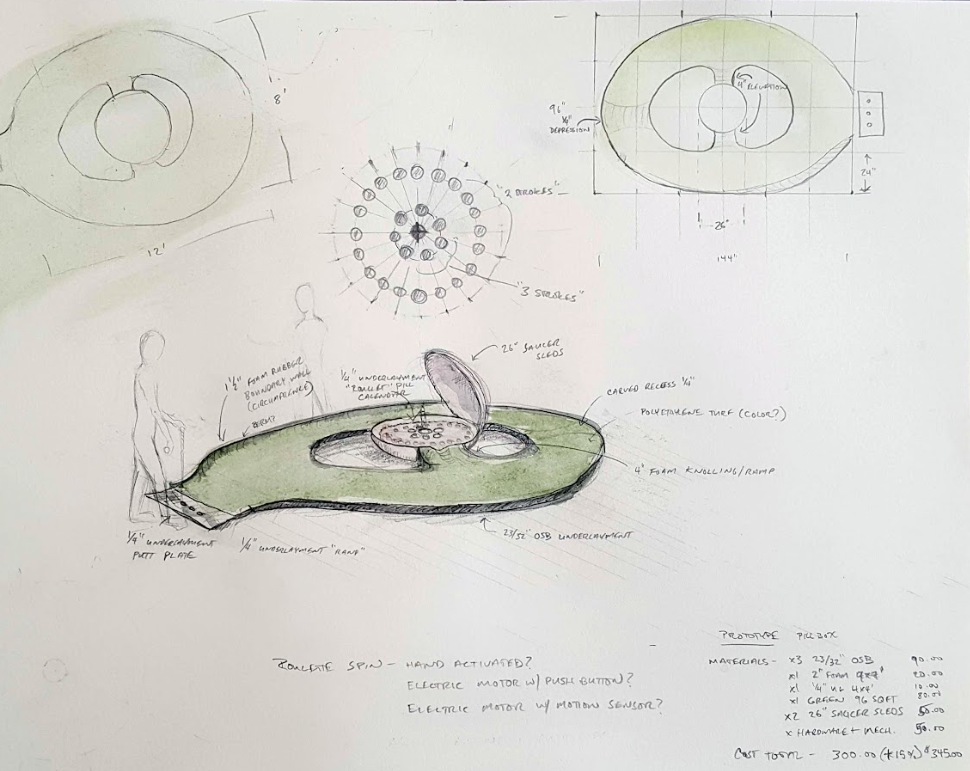
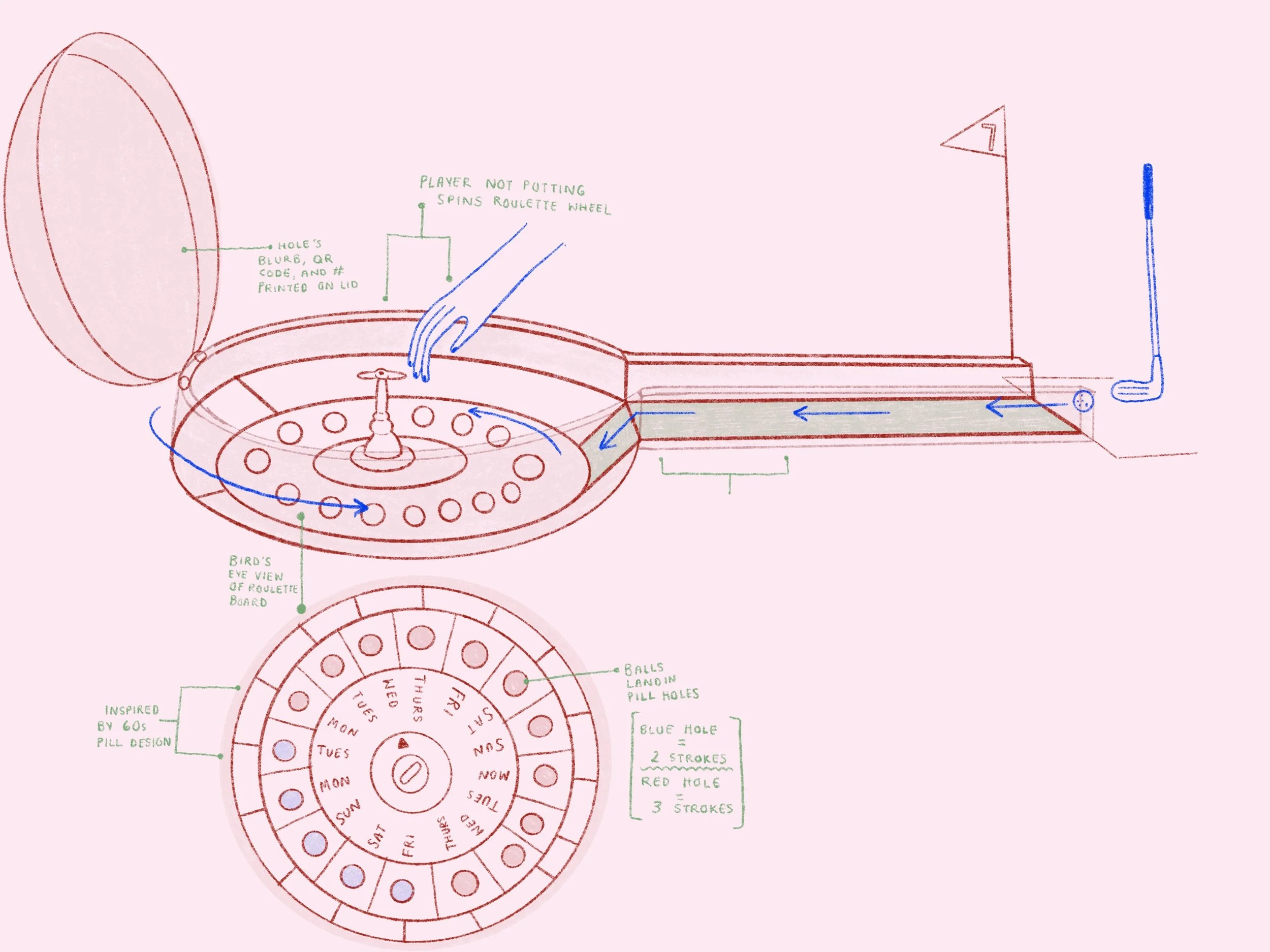
We developed the mini golf course, as well as the content and art associated with it, in part, through our Spring classes. Boyd and I co-taught Feminist Building, through which nine students contributed, to wildly varying degrees, to building the physical course. Students had extensive support from a local master carpenter (Mark Jensen), Boyd and me, and student workers from the campus Makerspace. The twenty-seven students in my Politics of Reproduction completed assignments through which they contributed art and website content.
Additional collaborators also informed the shape of the installation. David Miranda-Hardy’s Film and Media Studies class created films featured at several holes. The Trivia Time podcast producers, led by Kelly Sharron, created a trivia game connected to the mini golf course’s content, which debuted at the opening event. Students of Stina Soderling (Hamilton College) and Virginia Thomas (Providence College) created art featured throughout, while students at the Gender Institute for Teaching and Advocacy (GITA) at Metropolitan State University, Denver, directed by Anahi Russo-Garrido, designed a hole. Builders in Vermont Works for Women’s Trailblazer Program then constructed the hole based on the students’ design.
I am prouder of the Reproductive Justice Mini Golf course than anything else in my professional portfolio. But the story I’ve told here, which highlights the beauty and joy of feminist and queer art- and theory-filled collaboration, is necessarily partial. Informed by Marxist feminism, I have no interest in obscuring the labors that enabled the mini golf course’s production, which expand far beyond the physical construction and include: securing several grants, attending countless meetings, building a website and generating its content, creating art, producing a trivia game, managing people, monitoring budgets, writing press releases, speaking with the press, writing final reports and on and on. This work was more time consuming than the construction itself. Taking on this additional work on top of that of a regular semester was enormously challenging. In fact, getting to the finish line was full of frustrations. The Feminist Building class was the most aggravating teaching experience of my career. Several students in the class didn’t finish their holes or procrastinated to the point where the quality of their product was impacted. In a normal class, you give a grade that reflects the student’s engagement with the class. But we had an exhibition opening scheduled and we couldn’t just leave holes unfinished or poorly done. As such, leading up to the opening event, our core team (Colin Boyd, Rayn Bumstead, and I, as well as carpenter Mark Jensen) spent countless hours at the mini golf course cleaning up after students—after a full semester of investing at least 40 hours weekly into the project, and this was, again, on top of our typical workload.
Despite these challenges, my belief in the power of this kind of public-facing project was confirmed time and time again by players excitedly sharing how much they learned and by reflections from those Feminist Building and Politics of Reproduction students who invested most seriously in bringing the mini golf course to fruition. Figuring out how to play with academic feminist and queer theory is no easy task. But when we do, our activism is better and so is our thinking. Indeed, many people came to play mini golf who would never go to an academic talk about reproductive justice, attend a protest, read an academic book, or watch a documentary film. Plus, we experienced moments of profound happiness, love, and gratitude throughout the process, and the product was decidedly fun and joyful. My belief that reproductive justice activism should be joyful, pleasurable, and fun is informed by Sara Ahmed’s formulation of the feminist killjoy, through which she suggests that we can find joy in things that are enraging. And we can use feminist and queer knowledge production and artistic production in order to do so. In fact, the greatest lesson we can learn from the Reproductive Justice Mini Golf course is that we absolutely have to.