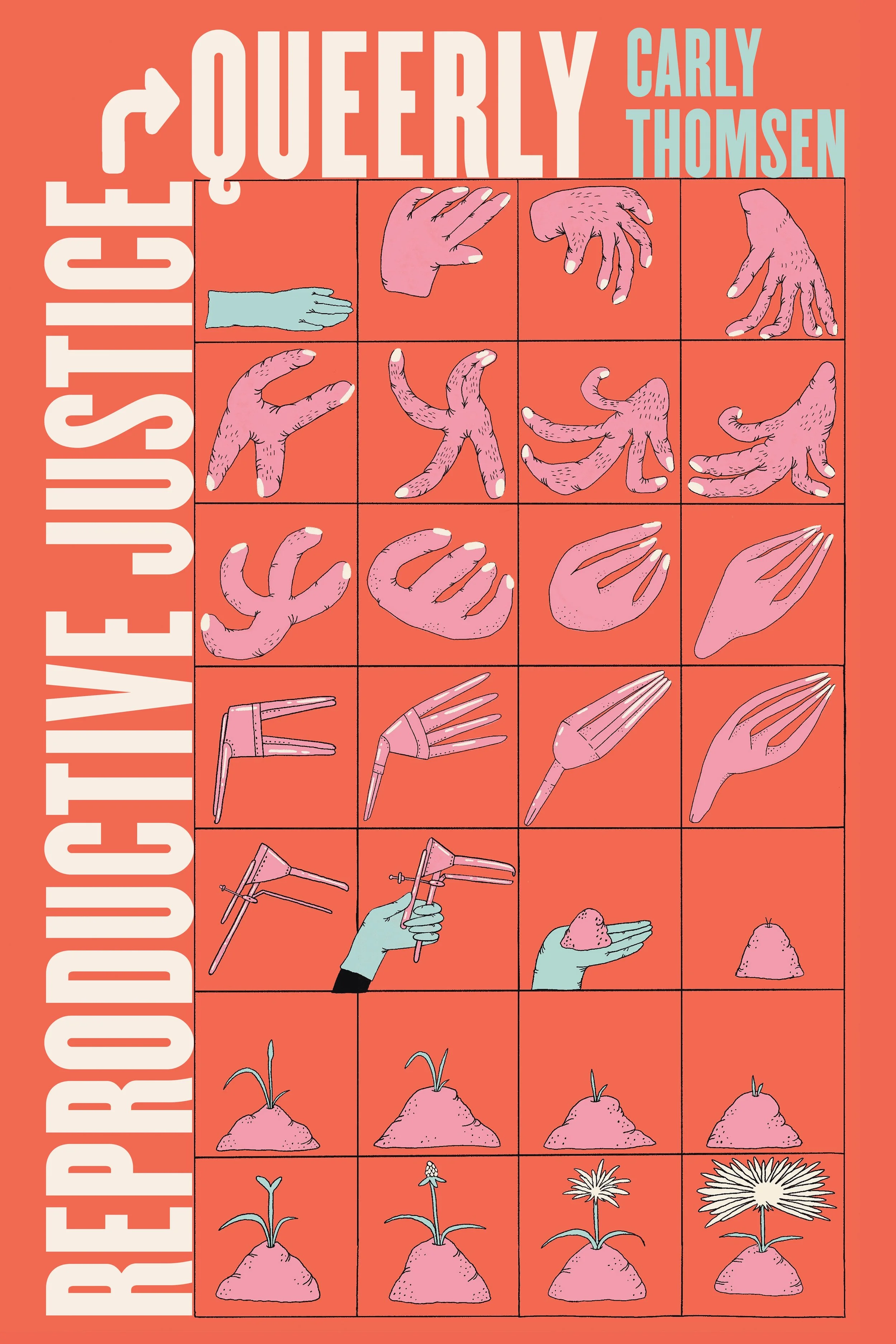
Reproductive Justice, Clearly
It is the contention of Reproductive Justice, Queerly that queer theory and reproductive justice need one another. This book approaches traditional reproductive justice issues—abortion, surrogacy, paid parental leave, crisis pregnancy centers, parenting—in queer ways.
Far from a traditional academic book, Reproductive Justice, Queerly reflects on original art made at queer art nights, a reproductive justice mini golf course, and a feminist art exhibition. Ultimately, it demonstrates that deployments of LGBTQ+ people in scholarly and activist spaces alike can have less than queer, and even conservative, results. Part academic critique, part artistic interpretation, and part activist intervention, Reproductive Justice, Queerly was written for scholars, activists, students, policy makers, and artists alike.
“Lots of books get written but rarely are they as brave as Carly Thomsen’s Reproductive Justice, Queerly. Refusing to give in to the dystopic future on offer by right wing assaults on reproductive justice, the book is also clear-eyed in delineating the possibilities and pitfalls of contemporary feminist, queer, and trans grammars of gender. Readers will be startled, gratified, and at times enraged by its argument but no one will doubt the value of Thomsen’s commitment to deepening left critical understandings of the challenges of the present.”
— Robyn Wiegman, Object Lessons
“I’m eager to teach this timely book, which demonstrates that new thinking is possible about some of the more pressing current controversies in the reproductive justice movement. This challenge to the rigidity of dogmatic thinking about inclusiveness is urgently needed and very welcome.”
— Loretta Ross, Calling In: How to Start Making Change with Those You'd Rather Cancel
“With the lives of women and trans/queer people under attack by reactionary political forces in the United States and elsewhere, Carly Thomsen’s impassioned call for greater attention to queer theory within the reproductive justice movement could not be more urgent or timely. Her intellectual and analytical contributions offer important thought-tools for resisting death-dealing policies and practices in the material world.”
— Susan Stryker, Transgender History: A Resource for Today’s Struggle—and Tomorrow’s
“Reproductive Justice, Queerly is a book I will gift to my young cousin (a burgeoning feminist of color), older white women in my activist circles in the Midwest, and feminist artists of all ages. As an artist, I am especially excited about what this book teaches us about the queer possibilities of art in our fights for reproductive justice. At once rigorous in its thinking and inviting in its tone, this book has a challenge to offer all of us. What a rarity!”
— Carmen Winant, The Last Safe Abortion
“Reproductive Justice, Queerly is a brave, creative, and fierce examination of the potentials of representing, creating, and intervening in the social semantics and politics of abortions, childbirth, paid maternity leaves, surrogacy, parentage, and pregnancies. Thomsen fabulously messes up our “straightforward” understandings of reproductive justice by framing these matters “queerly.” To do so, she delves into uncommon cultural sites such as art exhibitions and mini golf. In a volatile “post-Roe” political present that aims to eradicate resistance and action, Thomsen reveals novel pathways for powerful engagements towards a future that promises much more than what we have now.”
— Martin Manalansan, Global Divas: Filipino Gay Men in the Diaspora
“Reproductive Justice, Queerly grabbed me from the first page with its gracefully-flowing stories and politically astute analyses. It dives deep into the devastatingly consequential sites of injustice and responds with an insistence on—even a spirited romp with—queer practice. Here is art, pedagogies, aesthetics, resistance, collective process and of course bodies, all the ways we imagine, fight about and live within bodies, and all that tells us about doing reproductive justice. Creatively engaged with theory and grounded in practical outcomes, the book comes alive with surprising conversations with ordinary and not-so-ordinary people who help us understand what is at stake here: reproductive justice, yes, and also conversation itself, which may be the queerest and most necessary thing of all.”
— Finn Enke, Transfeminist Perspectives in and Beyond Transgender and Gender Studies